
Understanding neurofeedback training
Neurofeedback is a noninvasive form of brain training that helps the brain recognize and gradually improve patterns of activity associated with attention, emotional regulation, sleep, cognitive performance, and resilience.
What does “neurofeedback” mean?
The word may be unfamiliar, but the idea is straightforward:
“Neuro” refers to the brain and nervous system.
“Feedback” means receiving information about what is happening so you can make an adjustment.
You use feedback every day:
When you hear yourself speaking too loudly, you lower your voice.
When you see that you’re driving too fast on your speedometer, you ease off the gas.
When you see yourself leaning in a mirror, you adjust your posture.
When you feel yourself wobbling on a bicycle, you shift your weight to regain your balance.
Neurofeedback applies this same principle to brain activity—something we ordinarily cannot see or hear.
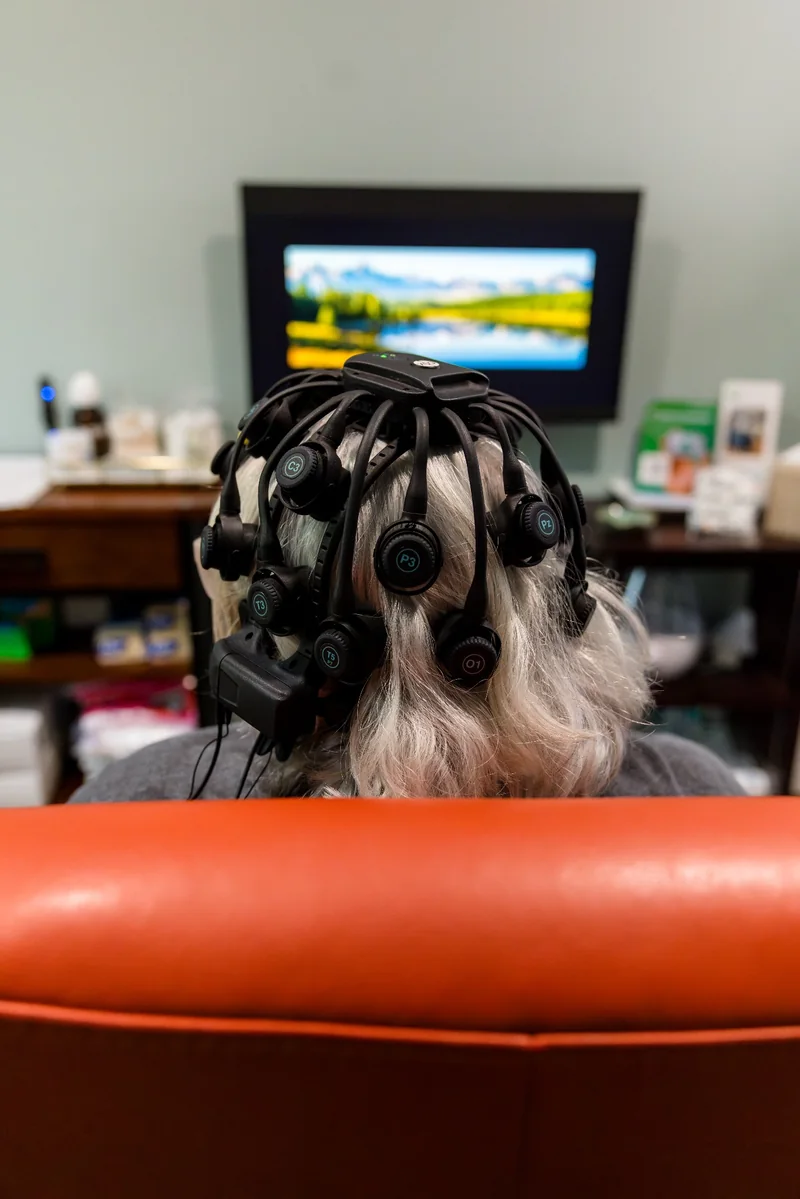
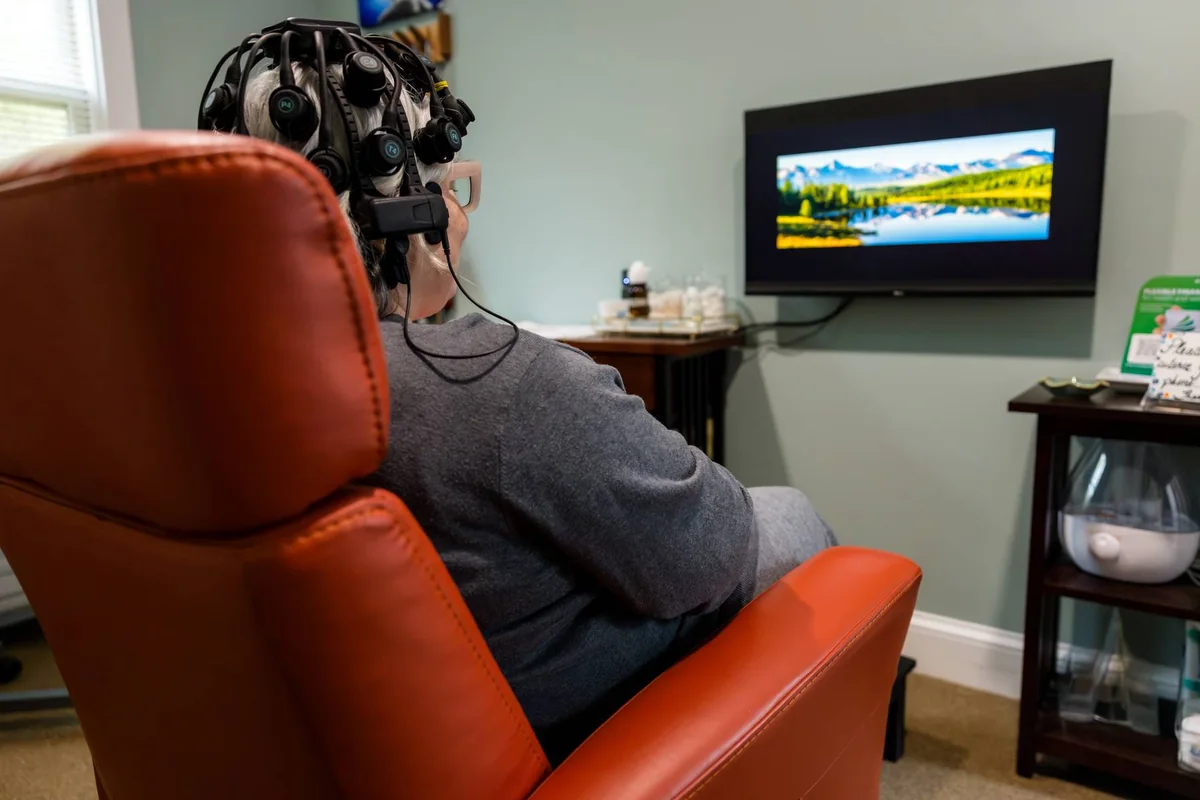
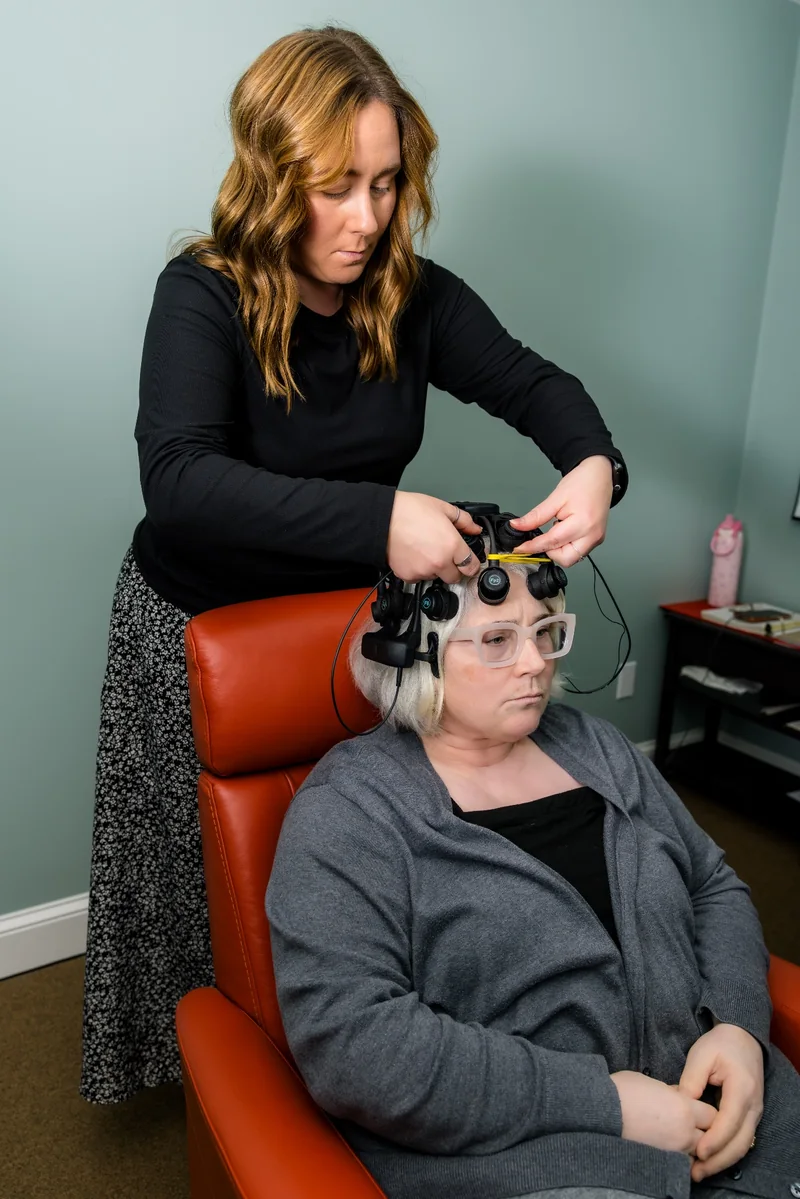
During a session, sensors placed on your scalp measure your brain’s electrical activity. A computer translates selected patterns of that activity into sounds or changes on a screen. These signals provide immediate feedback when your brain meets the goals established for your Training.
Neurofeedback does not force the brain into a particular state, nor is it a passive treatment. You do not have to understand brainwaves or consciously control them. It is a gradual learning process, and responses vary according to the individual, the complexity of the condition, and the consistency of training.
At Lucent Neurology, neurofeedback is guided by your objective qEEG findings, careful clinical observation and supervision, and periodic reassessment. Our goal is not simply to change an EEG measurement, but to support meaningful improvement in how a person feels, functions, and engages with daily life.
What Does a Neurofeedback Session Feel Like?
Sensors are placed on the scalp to measure EEG activity. You may watch a display or listen to audio while the computer analyzes that activity and changes the feedback according to the training criteria for your session.
You do not have to consciously figure out how to change your EEG. We ask about your experience during and after training, including changes in attention, energy, sleep, emotional state, headache or head pressure, and overall comfort.
Those observations help guide decisions about how care should progress.
A Gradual, Individualized Process
Some nervous systems tolerate training readily; others are more sensitive. We may begin with a focused approach and observe the response before making changes.
Neurofeedback generally involves a series of sessions. The number of sessions and the response vary among individuals, so we do not promise a particular result after a set number of visits.
If a patient experiences an undesirable change, we reconsider what and how much was trained. The plan may be modified, paused, or stopped. Progress is reviewed throughout care.
What training may focus on
Depending on the individual evaluation, training may focus on different aspects of brain regulation.
Brain Activity
Training may focus on selected patterns of electrical activity when they are relevant to the individual evaluation.
Frequency Regulation
Different rhythms of brain activity may be considered as possible training targets when appropriate.
Functional Connectivity
Training may address how activity in different brain regions appears to work together.
Functional Brain Networks
The plan may consider larger groups of brain regions involved in functions such as attention and emotional regulation.
How Do We Know Whether It Is Working?
Patient experience
We listen to how the patient feels and responds during and between sessions.
Daily function
We look for meaningful changes in everyday activities, not simply a change in an EEG measurement.
Objective reassessment
When appropriate, repeat assessment can add another perspective on whether the patterns of interest have changed.
Meet the team →
What Neurofeedback Cannot Tell Us
Neurofeedback is not a substitute for appropriate medical or psychiatric care, and it is not the right intervention for every neurological concern. A qEEG difference does not guarantee that training it will improve a symptom, and improvement during care does not by itself prove what caused the change.
Care may be coordinated with other clinicians or approaches when appropriate. The patient’s experience, daily function, and clinical context remain central to decisions about next steps.
The first step is a conversation.
We can discuss what you are experiencing, what previous evaluation has shown, and whether a Lucent neurological evaluation may provide useful additional information.
An evaluation does not obligate you to begin treatment.
Request a consultation